


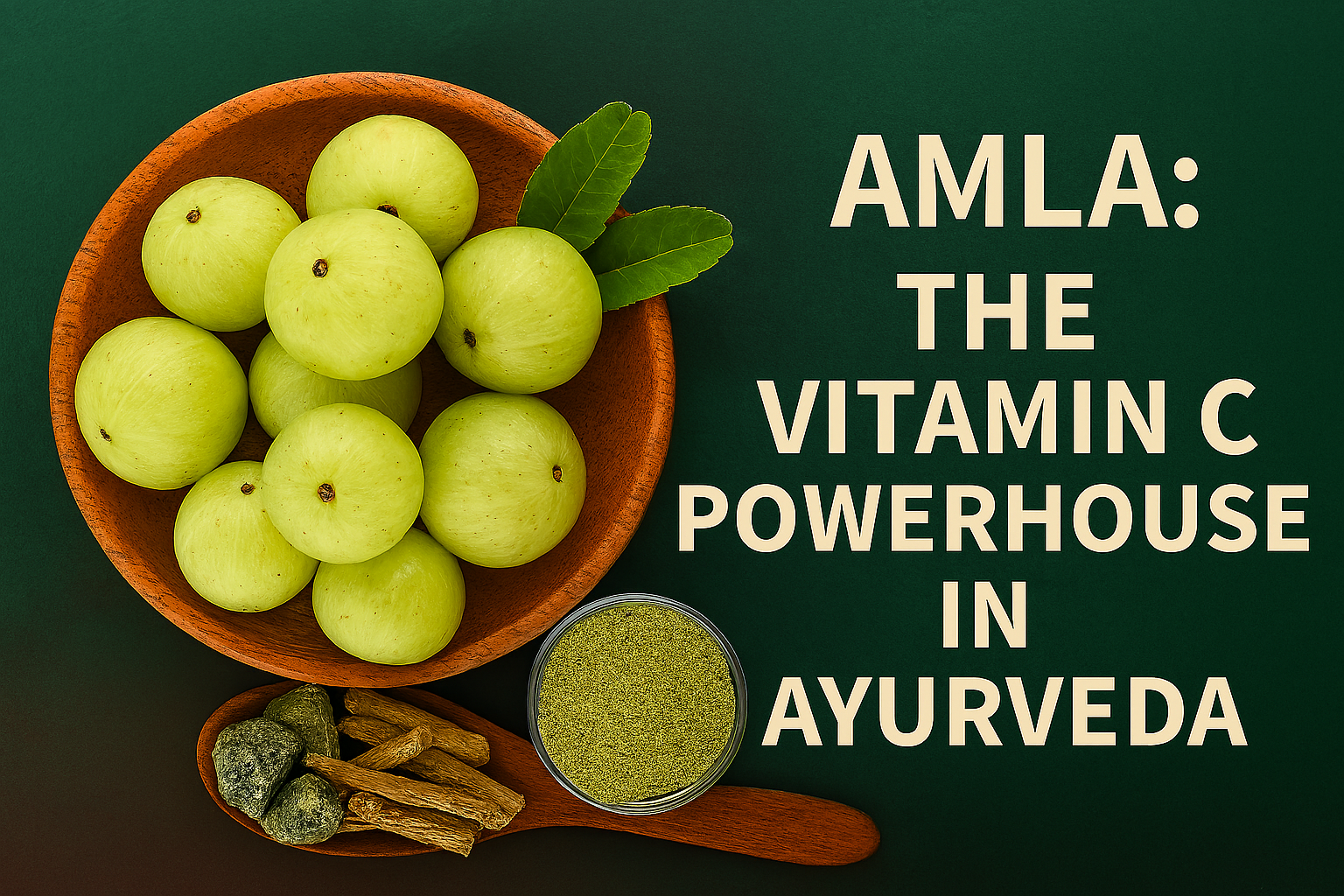
Amla: The Vitamin C Powerhouse in Ayurveda
Nutritional Profile of Amla
Amla’s potency lies in its extraordinary Vitamin C content — up to 600–700 mg per fruit, which is 20 times more than oranges. But it’s not just about quantity; Amla’s Vitamin C is heat-stable, thanks to its synergy with tannins and polyphenols, making it ideal for cooking and long-term storage.
Key nutrients include:
-
Vitamin C (ascorbic acid)
-
Tannins (gallic acid, ellagic acid)
-
Flavonoids (quercetin, kaempferol)
-
Iron, Calcium, Chromium
-
Fiber and amino acids
These compounds work together to deliver antioxidant, anti-inflammatory, and metabolic benefits.
Immunity & Antioxidant Defense
Amla is one of Ayurveda’s most powerful immune boosters. Its Vitamin C content enhances white blood cell function, supports collagen production, and protects against oxidative stress.
-
Antioxidant Shield: Neutralizes free radicals, reducing cellular damage.
-
Anti-inflammatory Action: Helps manage chronic inflammation and autoimmune conditions.
-
Respiratory Support: Used in traditional remedies for cough, cold, and asthma.
-
Gut Immunity: Supports gut flora and mucosal immunity.
Modern studies confirm Amla’s role in improving lipid profiles, glycemic control, and endothelial function, making it a valuable ally in chronic disease prevention.
Digestive & Metabolic Benefits
Amla is a digestive tonic that balances all three doshas, especially Pitta and Kapha.
-
Stimulates Agni (digestive fire): Enhances metabolism and nutrient absorption.
-
Relieves Constipation: Its fiber content and mild laxative effect support regularity.
-
Liver Detox: Promotes bile flow and liver enzyme activity.
-
Blood Sugar Regulation: Helps reduce postprandial glucose spikes and insulin resistance.
Amla is often consumed as part of Triphala, a classic Ayurvedic blend for gut health and detoxification.
Skin, Hair & Anti-Aging
Amla’s rejuvenating properties extend to beauty and longevity.
-
Skin Glow: Vitamin C boosts collagen, reduces pigmentation, and delays wrinkles.
-
Hair Health: Strengthens follicles, prevents premature greying, and promotes growth.
-
Anti-Aging: Its antioxidant profile slows cellular aging and supports tissue regeneration.
-
Eye Care: Traditionally used to improve vision and reduce eye strain.
Amla oil and hair masks are popular in Ayurvedic beauty rituals, while internal consumption supports radiance from within.
Dosha Balancing & Mental Wellness
Amla is tridoshic, meaning it balances all three doshas:
-
Vata: Nourishes tissues and calms the nervous system.
-
Pitta: Cools inflammation and supports liver detox.
-
Kapha: Stimulates metabolism and clears mucus.
Its cooling nature makes it ideal for mental clarity, emotional balance, and stress resilience. Amla is often included in Rasayana therapies for rejuvenation and vitality.
How to Use Amla
Amla is incredibly versatile and can be consumed in many forms:
-
Raw Fruit: Sour and tangy; best eaten fresh or with salt.
-
Juice: Taken on an empty stomach for detox and immunity.
-
Powder (Churna): Mixed with warm water or honey.
-
Capsules/Tablets: Convenient for daily supplementation.
-
Pickles & Candies: Traditional preparations with digestive benefits.
-
Chyawanprash: Amla-rich tonic for immunity and strength.
Dosage: Typically 500 mg to 1 g daily, but consult an Ayurvedic practitioner for personalized guidance.
Precautions
Amla is generally safe, but consider the following:
-
Acidity: May aggravate hyperacidity in sensitive individuals.
-
Medication Interactions: Consult a doctor if on blood thinners or diabetes medication.
-
Pregnancy/Nursing: Safe in food amounts; therapeutic doses should be supervised.
-
Quality Matters: Choose organic, GMP-certified sources to avoid contamination.
Modern Research & Global Recognition
Amla is gaining global attention as a scientifically validated superfruit. Studies show its role in:
-
Reducing oxidative stress and inflammation
-
Improving lipid and glucose metabolism
-
Enhancing skin and hair health
-
Supporting cardiovascular and liver function
Its inclusion in functional foods, nutraceuticals, and cosmeceuticals reflects its growing relevance in modern wellness.
Conclusion
Amla is more than just a fruit — it’s a holistic healer that embodies the essence of Ayurveda. With its unmatched Vitamin C content and wide-ranging benefits, Amla supports immunity, digestion, beauty, and longevity. Whether taken raw, juiced, or as part of traditional formulations, Amla offers a natural, sustainable path to vibrant health.
In a world seeking clean, plant-based solutions, Amla stands tall as a timeless remedy backed by both tradition and science.