

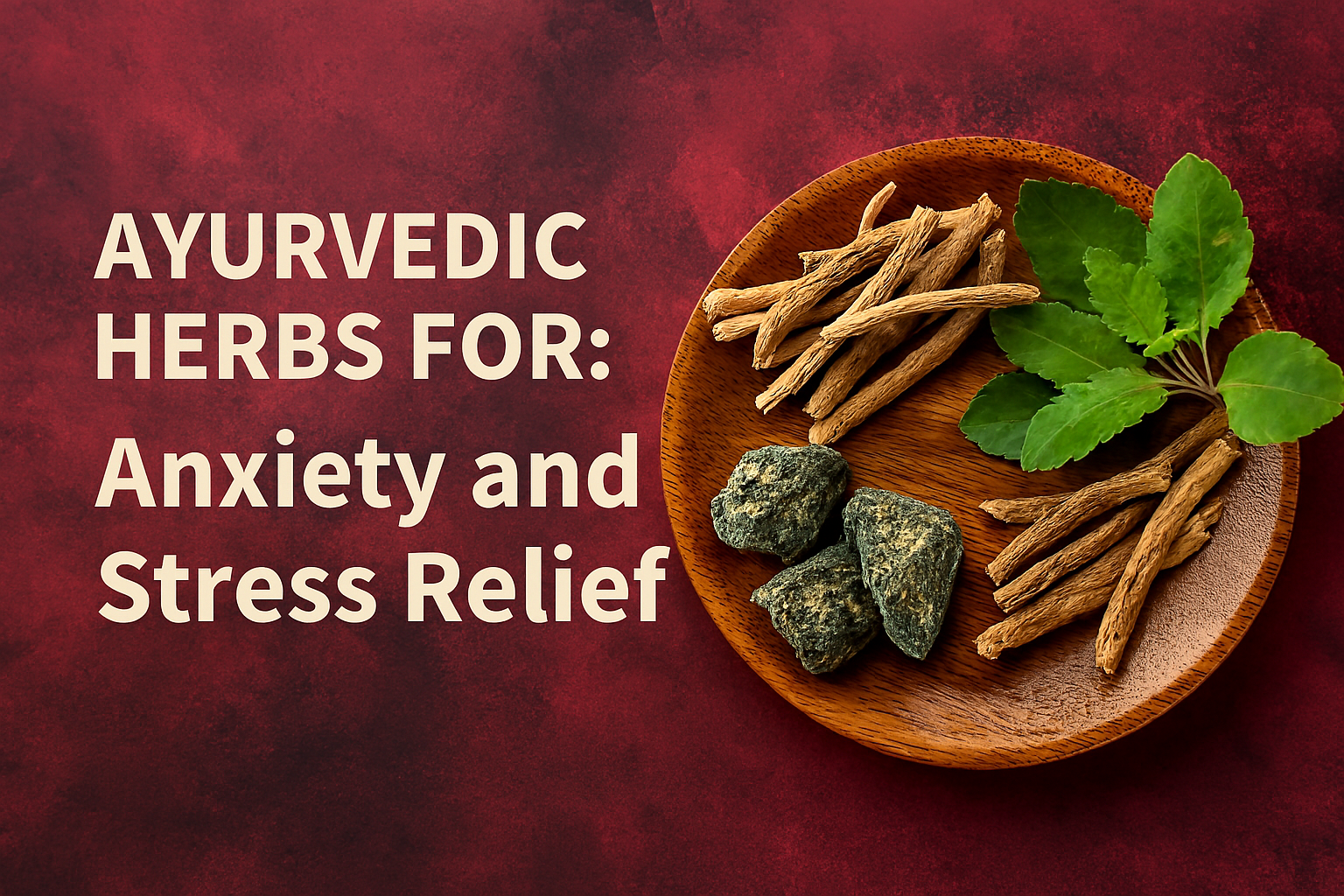
Ayurvedic Herbs for Anxiety and Stress Relief
Understanding Stress in Ayurveda
Ayurveda views stress and anxiety as imbalances in the Vata dosha (air and space elements). Excess Vata leads to restlessness, worry, and insomnia. Pitta imbalances may manifest as irritability and anger, while Kapha imbalances can cause lethargy and depression. Herbs are chosen to pacify these doshas and restore equilibrium.
Key Ayurvedic Herbs for Stress & Anxiety
1. Ashwagandha (Withania somnifera)
-
Benefits: Known as an adaptogen, Ashwagandha reduces cortisol levels, calms the nervous system, and improves sleep quality.
-
Use: Commonly taken as powder (churna) with warm milk or in capsule form.
-
Best For: Vata and Pitta imbalances, chronic stress, and fatigue.
2. Brahmi (Bacopa monnieri)
-
Benefits: Enhances memory, concentration, and mental clarity. It reduces anxiety by supporting neurotransmitter balance.
-
Use: Consumed as powder, capsules, or Brahmi tea.
-
Best For: Students, professionals, or anyone facing mental overload.
3. Jatamansi (Nardostachys jatamansi)
-
Benefits: A powerful calming herb that promotes deep sleep, reduces hyperactivity, and soothes the mind.
-
Use: Often taken as powder or oil for massage.
-
Best For: Insomnia, anxiety, and restlessness caused by excess Vata.
4. Shankhpushpi (Convolvulus pluricaulis)
-
Benefits: Traditionally used as a brain tonic, it reduces mental fatigue, supports memory, and calms anxiety.
-
Use: Available in syrups, powders, and capsules.
-
Best For: Stress-related cognitive decline and nervous exhaustion.
5. Tulsi (Ocimum sanctum)
-
Benefits: Known as “Holy Basil,” Tulsi reduces stress hormones, boosts immunity, and uplifts mood.
-
Use: Consumed as Tulsi tea or capsules.
-
Best For: Daily stress management and emotional balance.
6. Guduchi (Tinospora cordifolia)
-
Benefits: Strengthens immunity, detoxifies the body, and reduces stress-related inflammation.
-
Use: Taken as powder or decoction.
-
Best For: Pitta imbalances and stress-related digestive issues.
7. Licorice (Yashtimadhu)
-
Benefits: Nourishes the adrenal glands, supports energy levels, and calms the mind.
-
Use: Powder mixed with warm water or milk.
-
Best For: Chronic fatigue and stress-induced weakness.
Lifestyle Integration with Herbs
Ayurvedic herbs work best when combined with supportive practices:
-
Yoga & Pranayama: Breathing exercises like Anulom Vilom calm Vata.
-
Meditation: Daily mindfulness enhances the effects of herbs.
-
Diet: Warm, grounding foods (soups, ghee, whole grains) pacify Vata.
-
Routines: Regular sleep and oil massages (Abhyanga) reduce stress.
Precautions
-
Dosage: Always follow recommended doses; excess use may cause side effects.
-
Medical Conditions: Consult a practitioner if you have chronic illnesses or take medication.
-
Pregnancy/Nursing: Herbs like Ashwagandha and Jatamansi should be avoided unless prescribed.
-
Quality: Choose GMP-certified, AYUSH-approved brands to ensure purity.
Modern Research & Global Relevance
Scientific studies support the use of Ayurvedic herbs:
-
Ashwagandha: Shown to lower cortisol and improve resilience to stress.
-
Brahmi: Demonstrated cognitive-enhancing and anxiolytic effects.
-
Tulsi: Proven adaptogen with anti-stress properties.
Globally, these herbs are now marketed as natural alternatives to synthetic anti-anxiety medications, making Ayurveda increasingly relevant in modern wellness.
Conclusion
Ayurvedic herbs provide a gentle, holistic approach to managing anxiety and stress. By balancing doshas, calming the nervous system, and supporting overall wellness, herbs like Ashwagandha, Brahmi, Jatamansi, Shankhpushpi, and Tulsi offer sustainable relief without dependency. When combined with lifestyle practices such as yoga, meditation, and mindful eating, they create a powerful toolkit for mental resilience.
Ayurveda reminds us that true healing comes from harmony — not just symptom management. Choosing the right herbs for your constitution can help you cultivate calm, clarity, and strength in the face of life’s challenges.