

Curcumin vs Turmerones
Introduction: The Complexity of Turmeric
Turmeric (Curcuma longa) is more than just a golden spice — it’s a pharmacological powerhouse. While most attention goes to curcumin, the bright yellow polyphenol responsible for turmeric’s color and anti-inflammatory fame, another class of compounds called turmerones is gaining recognition. These aromatic molecules, found in turmeric’s essential oil fraction, offer distinct and complementary health benefits.
Understanding the difference between curcumin and turmerones helps us appreciate turmeric’s full therapeutic spectrum — especially in Ayurvedic formulations and modern supplements.
What Is Curcumin?
Curcumin is a polyphenolic compound that makes up 2–5% of turmeric’s dry weight. It’s known for:
-
Anti-inflammatory effects: Curcumin inhibits NF-κB, COX-2, and other inflammatory pathways.
-
Antioxidant activity: It scavenges free radicals and boosts endogenous antioxidant enzymes like glutathione.
-
Cellular protection: Curcumin supports mitochondrial health and reduces oxidative stress.
-
Skin benefits: It helps manage acne, psoriasis, and hyperpigmentation through its anti-inflammatory and melanin-regulating properties.
However, curcumin has poor bioavailability — it’s rapidly metabolized and poorly absorbed unless paired with enhancers like piperine (black pepper) or fats.
What Are Turmerones?
Turmerones are aromatic sesquiterpenes found in turmeric’s essential oil. The most studied types include:
-
Ar-turmerone
-
α-turmerone
-
β-turmerone
These compounds make up the volatile fraction of turmeric and are responsible for its earthy aroma. Unlike curcumin, turmerones are lipophilic, meaning they dissolve in fats and are more easily absorbed.
Key benefits of turmerones:
-
Neuroprotective effects: Ar-turmerone promotes neural stem cell proliferation and may support brain regeneration.
-
Immune modulation: Turmerones help regulate immune responses and reduce allergic inflammation.
-
Antimicrobial activity: They exhibit antibacterial and antifungal properties.
-
Curcumin absorption: Turmerones enhance the bioavailability of curcumin when consumed together.
Curcumin vs Turmerones: Key Differences
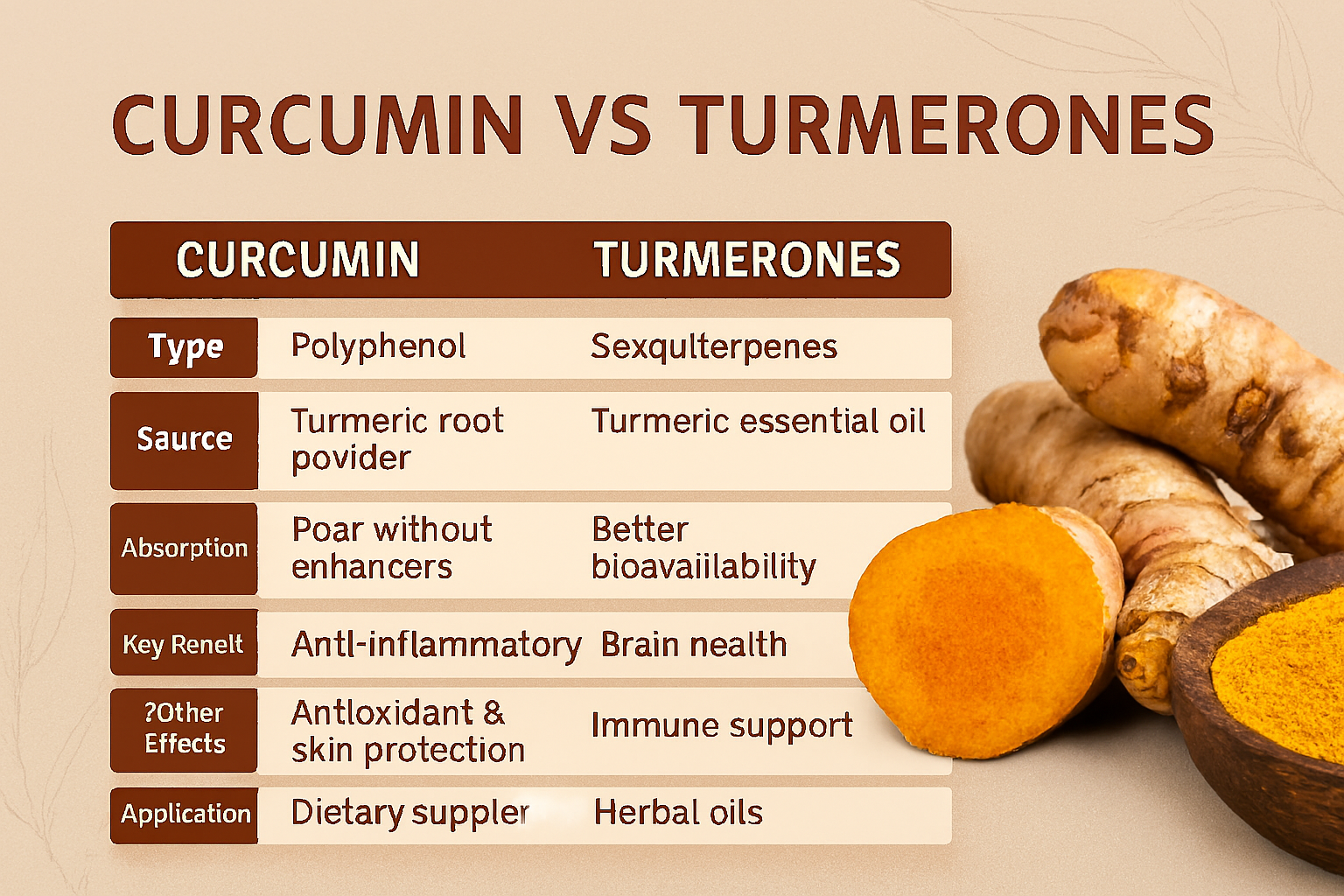
| Feature | Curcumin | Turmerones |
|---|---|---|
| Chemical class | Polyphenol | Sesquiterpene |
| Solubility | Poor in water, better in fats | Lipophilic (fat-soluble) |
| Primary source | Turmeric root powder | Turmeric essential oil |
| Main benefits | Anti-inflammatory, antioxidant, skin health | Brain health, immune support, absorption enhancer |
| Bioavailability | Low (needs enhancers) | Moderate (naturally absorbed) |
| Color/aroma | Bright yellow pigment | Earthy aromatic scent |
Why the Difference Matters
Understanding the distinction between curcumin and turmerones is crucial for:
1. Formulation Strategy
Most turmeric supplements focus solely on curcumin. However, full-spectrum turmeric extracts that retain turmerones offer broader benefits. Ayurvedic formulations often use whole turmeric or oil-based decoctions to preserve both compounds.
2. Bioavailability Enhancement
Turmerones naturally enhance curcumin’s absorption. Combining both in a single product — like Skin Glow Booti Juice — ensures better delivery and efficacy.
3. Targeted Benefits
-
Use curcumin-rich extracts for inflammation, skin conditions, and oxidative stress.
-
Use turmerone-rich oils for cognitive support, immune modulation, and antimicrobial protection.
4. Synergistic Action
Together, curcumin and turmerones create a synergistic effect — amplifying each other’s benefits and mimicking the holistic approach of Ayurveda.
Practical Applications
Here’s how to incorporate both compounds into your wellness routine:
-
Golden milk: Use whole turmeric with black pepper and ghee to activate curcumin and turmerones.
-
Turmeric essential oil: Add a few drops to carrier oils for massage or aromatherapy.
-
Herbal blends: Choose products like Skin Glow Booti Juice that combine turmeric’s full spectrum for skin and systemic benefits.
-
DIY mask: Mix turmeric powder with aloe vera and turmeric oil for topical skin support.
-
Supplement stack: Pair curcumin capsules with turmeric essential oil softgels for dual action.
Considerations and Safety
-
Skin sensitivity: Turmeric oil may cause irritation in sensitive individuals — patch test first.
-
Dosage balance: Excessive curcumin may cause digestive discomfort; turmerones are generally well tolerated.
-
Purity matters: Ensure your turmeric oil is food-grade and free from synthetic additives.
-
Drug interactions: Curcumin may interact with anticoagulants and diabetes medications — consult your doctor.
Conclusion
Turmeric’s healing power lies not in a single molecule, but in its synergistic blend of curcumin and turmerones. While curcumin fights inflammation and oxidative stress, turmerones support brain health, immunity, and absorption. Together, they embody the Ayurvedic principle of holistic healing.