

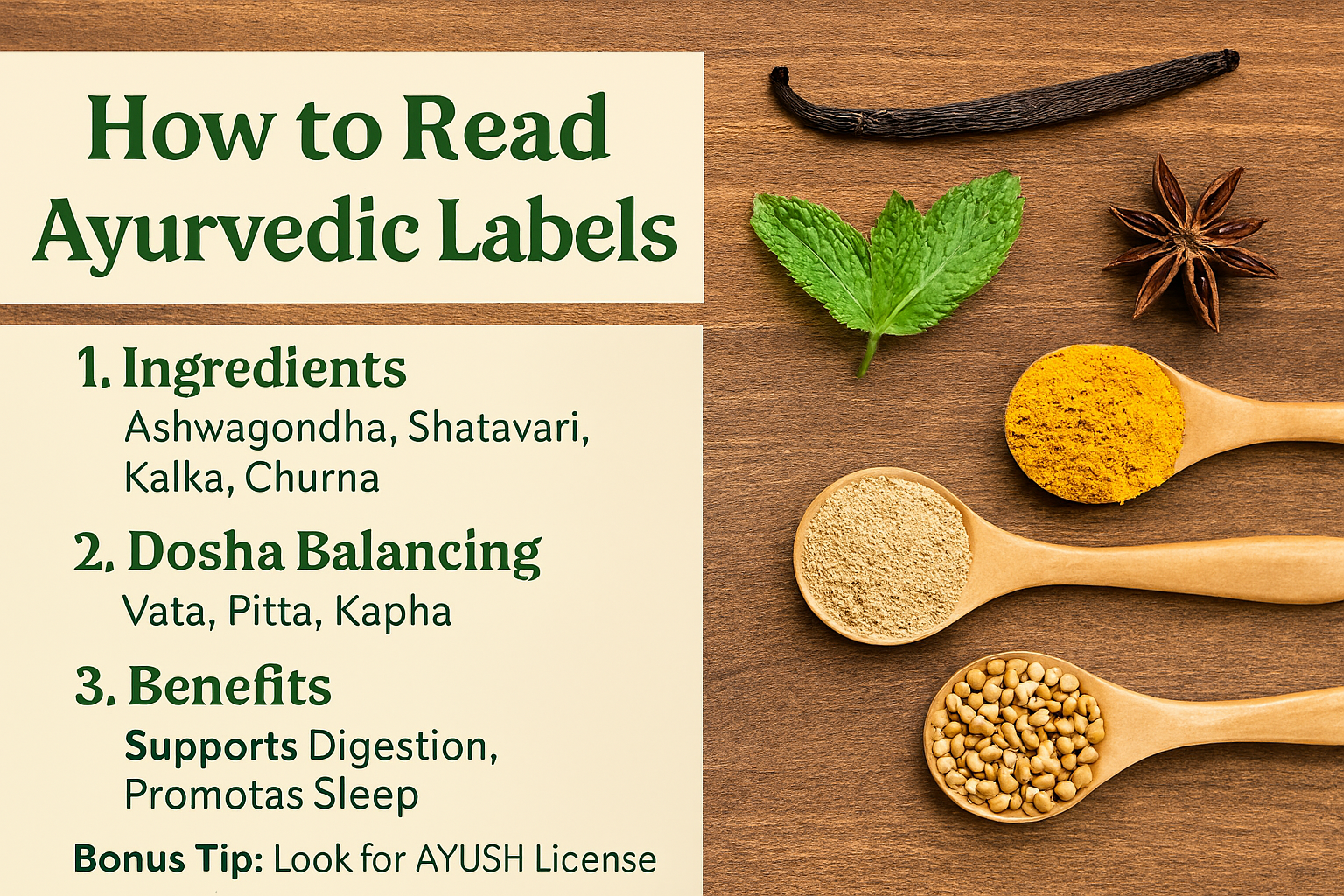
How to Read Ayurvedic Labels
In a world flooded with wellness products, Ayurvedic labels can feel like a cryptic scroll. But once you understand the language, they reveal a powerful story of healing, balance, and ancient wisdom. Let’s break it down.
1. Ingredients: More Than Just Herbs
Ayurvedic labels often list herbs by their Sanskrit names — Ashwagandha, Shatavari, Haritaki, Mulethi, etc. But what do they mean?
-
Ashwagandha (Withania somnifera): Adaptogen that reduces stress and boosts vitality
-
Shatavari (Asparagus racemosus): Supports hormonal balance and female reproductive health
-
Haritaki (Terminalia chebula): Detoxifying agent, improves digestion and gut health
-
Mulethi (Licorice root): Soothes inflammation, supports respiratory health
Look for standardized extracts or ratios (e.g., 10:1) to understand potency. If the label mentions Kalka, Lepa, or Churna, it refers to traditional preparation methods — paste, plaster, or powder respectively.
2. Dosha Balancing: Vata, Pitta, Kapha
Every Ayurvedic product aims to balance one or more doshas — the bio-energies that govern our body:
| Dosha | Element | Traits | Imbalance Symptoms |
|---|---|---|---|
| Vata | Air + Ether | Creativity, movement | Anxiety, dryness, insomnia |
| Pitta | Fire + Water | Digestion, focus | Anger, acidity, inflammation |
| Kapha | Earth + Water | Stability, immunity | Lethargy, congestion, weight gain |
Labels may say “Balances Vata and Pitta” or “Tridoshic” — meaning it supports all three doshas. Choose based on your current imbalance or seasonal needs.
3. Benefits: What to Expect
Ayurvedic labels often list functional benefits like:
-
“Supports digestion and detoxification”
-
“Promotes healthy sleep and mental clarity”
-
“Balances blood sugar and improves skin health”
These are rooted in Rasayana — the rejuvenation branch of Ayurveda. Look for clinically backed herbs like Ashwagandha (for stress) or Bacopa (for cognition) to align with modern expectations.
Bonus Tip: Look for AYUSH License & Shelf Life
Authentic Ayurvedic products carry an AYUSH license number, indicating regulatory approval. Also check:
-
Shelf life (usually 24–36 months)
-
Form (tablets, juice, powder)
-
Allergen info (e.g., gluten-free, vegan)
Final Thought
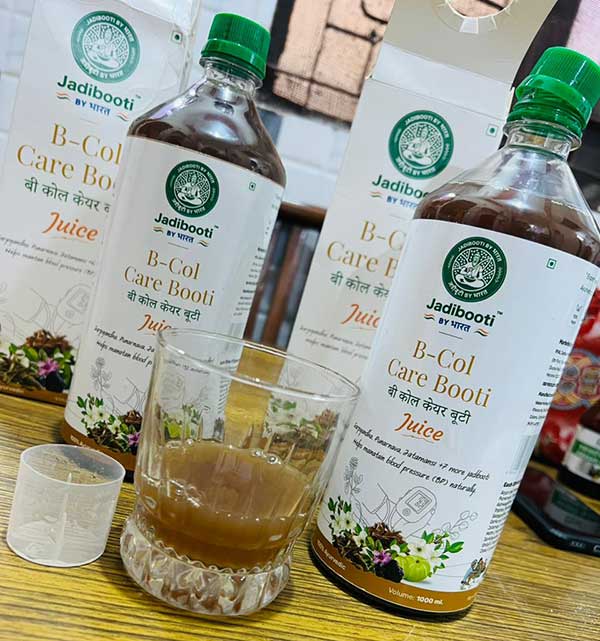
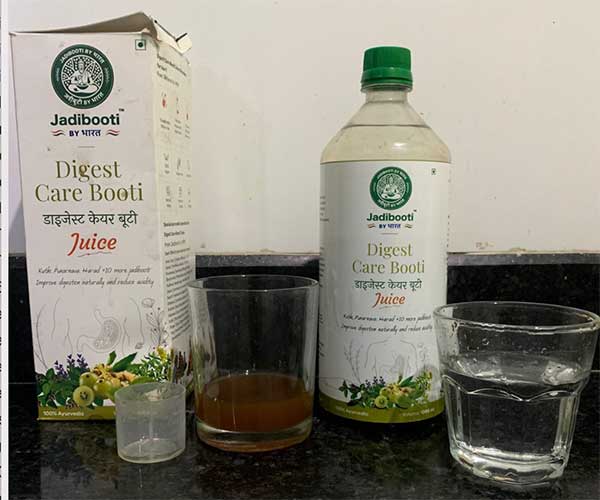
Reading Ayurvedic labels isn’t just about ingredients — it’s about understanding your body’s needs and choosing products that restore balance. Whether it’s Skin Glow Booti Juice for radiance or Karela Jamun Juice for sugar control, the label is your guide to holistic healing.