

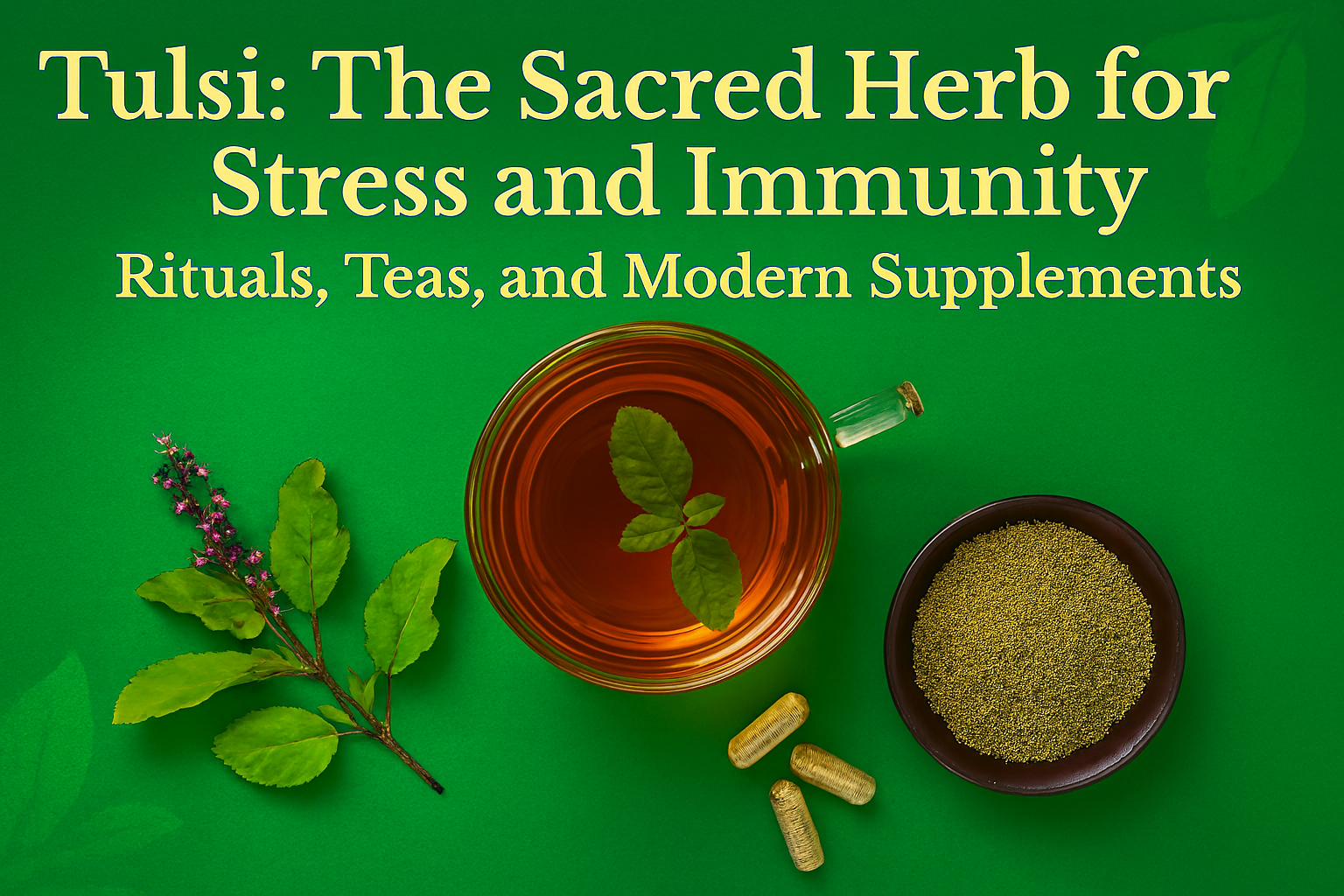
Tulsi: The Sacred Herb for Stress and Immunity
Introduction
Tulsi (Ocimum sanctum), also known as Holy Basil, is often called the “Queen of Herbs” in Ayurveda. For over 3,000 years, it has been revered not only as a medicinal plant but also as a sacred symbol in Indian households and temples. Tulsi’s reputation as a powerful adaptogen and immunity booster has made it a cornerstone of Ayurvedic wellness. Today, modern science is beginning to validate what ancient traditions have long known: Tulsi supports stress relief, strengthens immunity, and promotes holistic health.
Historical and Spiritual Significance
-
Sacred status: Tulsi is worshipped in Hindu households, often planted in courtyards and temples. It symbolizes purity, protection, and devotion.
-
Ayurvedic classification: Tulsi is considered a Rasayana herb — rejuvenating, longevity-promoting, and balancing for mind, body, and spirit.
-
Traditional uses: Ancient texts describe Tulsi as a remedy for respiratory issues, fevers, digestive problems, and mental clarity.
Key Benefits of Tulsi
1. Stress Relief & Adaptogenic Properties
Tulsi is a natural adaptogen, helping the body cope with physical, emotional, and environmental stress. Studies show it reduces cortisol levels and promotes calmness.
2. Immunity Boost
Rich in antioxidants, Tulsi enhances immune response, making the body more resilient against infections. It is particularly noted for its role in respiratory health.
3. Respiratory Support
Tulsi is traditionally used to ease coughs, colds, and asthma. Its anti-inflammatory and antimicrobial properties help clear airways and fight pathogens.
4. Metabolic Health
Emerging research suggests Tulsi may help regulate blood sugar and cholesterol, supporting cardiovascular and metabolic wellness.
5. Mental Clarity & Mood Balance
Tulsi is said to sharpen memory, improve focus, and reduce anxiety. Its calming effect makes it ideal for meditation and mindfulness practices.
Modern Scientific Studies
-
Stress & Anxiety: Clinical trials confirm Tulsi’s adaptogenic effects, reducing stress markers and improving mood.
-
Immunity: Research highlights Tulsi’s antimicrobial and anti-inflammatory compounds, which strengthen immune defense.
-
Respiratory Health: Studies show Tulsi extracts help manage asthma and bronchitis symptoms.
-
Metabolic Benefits: Evidence suggests Tulsi may lower blood glucose and lipid levels, though more robust trials are needed.
Rituals with Tulsi
1. Daily Worship
Tulsi plants are often worshipped in Indian households, symbolizing health and spiritual protection.
2. Morning Rituals
Chewing fresh Tulsi leaves or drinking Tulsi water is a traditional practice to start the day with vitality.
3. Meditation Aid
Tulsi’s calming aroma and adaptogenic properties make it a supportive herb for meditation and yoga.
4. Seasonal Detox
Tulsi teas and decoctions are consumed during seasonal transitions to strengthen immunity and cleanse the body.
Tulsi Teas and Decoctions
1. Tulsi Green Tea
Combines Tulsi’s adaptogenic properties with green tea’s antioxidants for stress relief and metabolism support.
2. Tulsi Ginger Tea
A warming blend that supports digestion and immunity, especially during cold seasons.
3. Tulsi Mulethi Tea
Tulsi with licorice root soothes sore throats and respiratory discomfort.
4. Tulsi Detox Tea
Blends Tulsi with herbs like turmeric and lemongrass for cleansing and rejuvenation.
Modern Supplements
1. Capsules & Tablets
Standardized extracts provide consistent dosage for stress relief and immunity support.
2. Powders (Churna)
Versatile for mixing into smoothies, juices, or warm water.
3. Liquid Extracts & Tinctures
Fast absorption, convenient for daily use.
4. Functional Foods
Energy bars, herbal shots, and fortified snacks increasingly feature Tulsi.
5. Skincare Products
Tulsi’s antimicrobial and antioxidant properties make it popular in creams, masks, and cleansers.
Safety & Considerations
-
Dosage: Typically 300–500 mg/day of standardized extract is used in studies.
-
Precautions: Pregnant women and individuals on blood-thinning medications should consult a healthcare provider.
-
Side effects: Generally safe, but excessive consumption may cause mild nausea or lowered blood sugar.
Conclusion
Tulsi is more than just a herb — it is a sacred symbol, a daily ritual, and a scientifically validated adaptogen. From stress relief to immunity support, respiratory health to metabolic balance, Tulsi bridges ancient wisdom with modern wellness. Whether consumed as teas, supplements, or integrated into skincare, Tulsi continues to be a timeless ally for holistic health.